
The World Is Switching Banks
Feb 09, 2026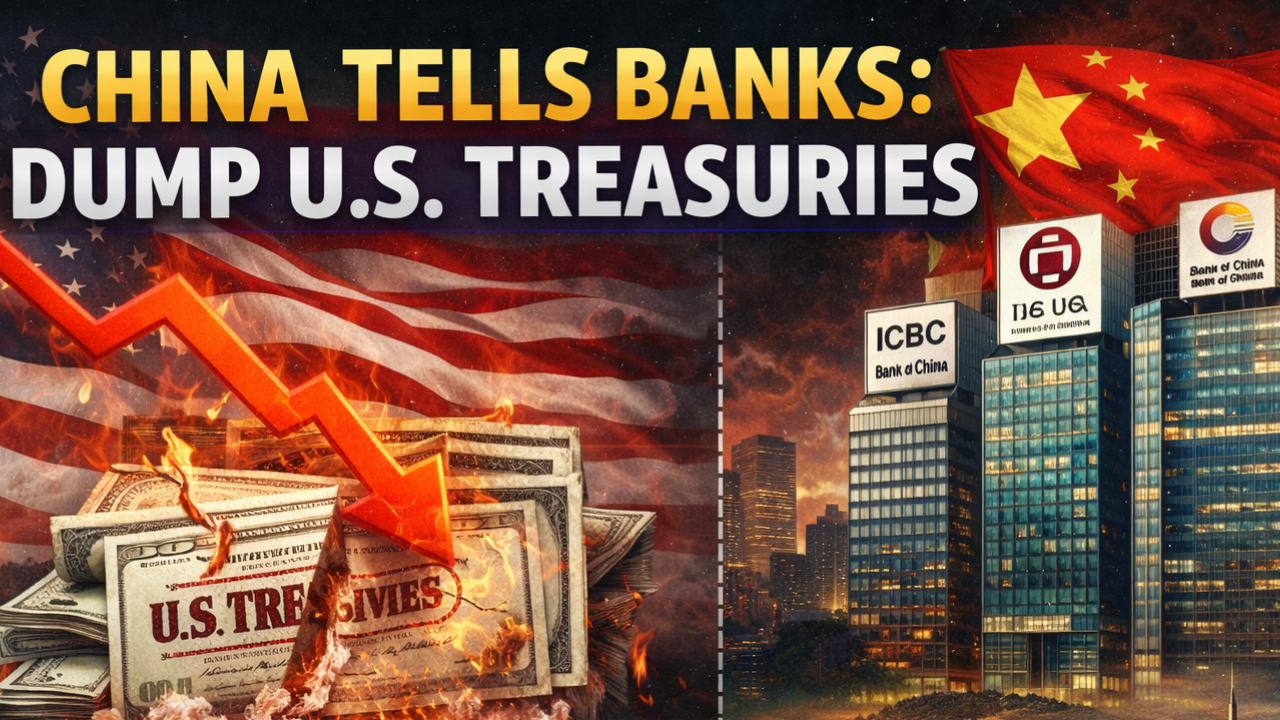
Beijing Dumps Treasuries — And the Dollar’s Unipolar Cycle Enters Its Final Act
Weekly Macro Analysis • February 9, 2025
This week, a piece of news carries the weight to reshape global macro equilibria for years to come. Bloomberg reports, citing direct sources, that Chinese authorities have ordered the country’s major banks to curb purchases of U.S. Treasury securities and begin unwinding their most significant existing positions. The directive currently does not touch sovereign reserves — those remain under Beijing’s direct control — but it marks a precise and unmistakable intention.
This is not a technical adjustment. It is a political signal.
The official narrative speaks of “market risk diversification,” but the reality runs deeper. A de-dollarization process is accelerating that is no longer confined to BRICS summits or academic papers — it is becoming operational, with concrete instructions flowing to financial institutions.
Look at the bigger picture: gold is trading at levels that would have seemed unrealistic a year ago. The dollar is losing ground in a structural, not cyclical, fashion. And now the largest foreign creditor of the United States is formally beginning to reduce its exposure. Three data points. One direction.
Beijing Shuts the Digital Door Too
In parallel, China has expanded its crypto crackdown to include, for the first time, stablecoins and tokenized real-world assets, with a specific focus on the offshore issuance of yuan-denominated stablecoins.
The message is consistent with the Treasury move: Beijing wants total control over capital flows and has no intention of leaving escape routes — neither traditional nor digital. Anyone who thought tokenization could serve as an alternative channel to bypass Chinese capital controls now has a clear answer.
Where the Capital Flows
If the financial center of gravity is shifting away from the U.S., the natural question is: toward where? The answer is already visible.
The UAE and Saudi Arabia are building financial, technological, and logistics infrastructure at a pace unprecedented in the region. These are no longer “emerging markets” in the traditional sense — they are global hubs in the making.
But the scope is wider. Egypt is attracting massive infrastructure investment. Sub-Saharan Africa is on the radar of Gulf sovereign wealth funds. Brazil and India, each with their own complexities, are benefiting from flows seeking yield and diversification away from dollar risk.
What was a contrarian thesis yesterday is becoming a crowded trade under construction today.
Washington’s Dilemma
Here lies the most critical point. The United States finds itself trapped in a scenario where every move carries a steep cost.
If the Fed halts quantitative tightening and cuts rates to ease pressure on the debt, yields risk exploding — not because of monetary policy, but because of a loss of confidence. A bond market that senses debt monetization reacts in the opposite direction to what is intended. Debt becomes more expensive, not less.
If instead it stays the course — high rates, QT ongoing — the problem becomes refinancing. The U.S. needs to roll over trillions of dollars in debt over the next 12 to 24 months. If foreign buyers step back and domestic demand doesn’t compensate, the system seizes up. Liquidity dries out, markets suffer, and the cost of debt servicing devours an ever-larger share of the federal budget.
There is no painless way out. And for anyone allocating capital, this is the single most relevant macro data point right now.
Positioning for the Shift
The dollar’s unipolar cycle does not end tomorrow. But the direction is set, and this week added another decisive piece to the puzzle. Those who position early on this structural shift will hold a significant edge in the years ahead.
The options on the table are varied, each with its own risk profile:
Swiss Franc — The ultimate safe-haven currency for those seeking pure protection from dollar risk.
Emerging Market Currencies (BRL, EGP) — Potentially high returns, but with volatility that demands strong conviction and precise timing.
Gulf Real Estate (Dubai, Abu Dhabi, Riyadh) — The most tangible play: real demand, demographic growth, zero income tax, and international capital flows showing no signs of slowing.
India, UAE, Saudi Equities — Direct exposure to structural growth. These are the exchanges where the next decade of expansion will be priced in.
The world is switching banks. Best not be the last to know.
━━━━━━━━━━━━━━━━━━━━━━━━━━━━━━
Join the Noodles Research Community
Independent Macro Analysis for Serious Investors
This analysis reflects our current views and is subject to change. This is not financial advice.
This article outlines the structural forces shaping energy markets, geopolitics, and global liquidity.
Noodles Research translates these macro dynamics into actionable insight for crypto and digital-asset investors.
